In November 2025, Toronto City Council voted to change the zoning rules for residential neighbourhoods – significantly changing a residential zoning framework that has been in place for almost 70 years.
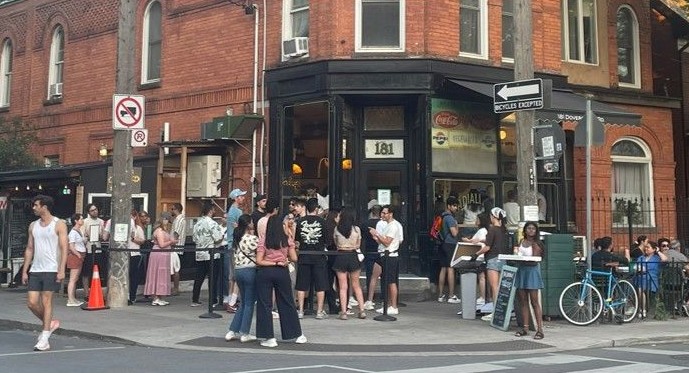
On designated streets, a broad range of businesses can now operate from residential properties like single family homes or apartment buildings, including restaurants, bars*, cafes, cannabis* stores, all with outdoor patios and many other kinds of businesses.
Residential property owners or developers no longer have to apply to the Committee of Adjustment for a variance from the residential by-law because the by-law itself has been changed to allow such businesses.
City Planning described this historic change as a way to support small, local businesses and bring goods and services closer to residents.
However, the changes also raise questions about where new businesses are needed in Toronto, how such businesses will impact the quality of life for neighbours, the future of residential zoning, and why residential properties need to be converted to commercial uses during a housing crisis. Allowing commercial uses in residential properties also creates a potential pathway for the loss of rental housing: Section 50(1)(b) of the Ontario Residential Tenancies Act allows landlords to issue an eviction notice to convert a rental unit to a non-residential use.
What properties are affected?
The new zoning rules do not apply to every residential property in Toronto.
There are two main areas affected: Major Streets and Neighbourhood Interiors
Major Streets
“Major Street” does not mean only large commercial roads as commonly understood. “Major Streets” also include many residential streets that only have residences on them or are mostly residences.
Some “Major Streets” have also been excluded from the new by-law due to requests from Councillors of certain wards.
To find out more about “Major Streets” and which “Major Streets” are affected, click [HERE]
To read the residential by-law changes with regard to “Major Streets”, see City of Toronto By-law 1509-2025; click [HERE]
Neighbourhood Properties
More limited retail and restaurant permissions also apply to certain properties within “Neighbourhood Interiors” in the Toronto and East York Districts.
To find out which properties are affected, click [HERE]
To read the residential by-law changes with regard to Neighbourhood Properties, see City of Toronto By-law 1507-2025; click [HERE]
What types of businesses are allowed?
The changes allow a wide range of commercial businesses to operate from certain residential properties on designated streets. On Major Streets, an establishment can occupy up to 150 square metres (approximately 1,600 sq. ft.) under By-law 1509-2025. Businesses that may be permitted include restaurants, cafes*, bars*, and take-out establishments, retail stores, cannabis* and vape* shops, pet grooming, dry cleaning, offices, fitness facilities, studios, workshops and many more.
To see which businesses are allowed, click [HERE]
* Some of these businesses are also subject to provincial licensing and/or regulatory requirements. These requirements are separate from Toronto’s zoning rules. See [Do these new zoning rules really allow bars, cannabis and vape shops?] for more information.
Quick Overview?
We have prepared a one-page fact sheet that describes what changed, COTRA survey results and key concerns of our residents.
Read the fact sheet [HERE]
Explore More
What Toronto residents told us – survey results
What COTRA recommended to City council
What the City said–and what the evidence shows
COTRA’s responses to Planning Committee’s questions
Council & Resources
Latest Posts
- Do these new zoning rules really allow bars, cannabis and vape shops?Toronto’s new neighbourhood retail rules were promoted as a way to bring small shops and services closer to residents. … Read more
- Contact Your Councillor and Mayor – Suggested EmailIf you are concerned about the zoning changes affecting residential properties, you may wish to contact your City Councillor … Read more
- What the City said – and what the evidence showsCity Planning presented several reasons for expanding commercial permissions in residential neighbourhoods. COTRA reviewed the City’s reports, data, maps … Read more
- Which Major Streets are affected?The new zoning rules apply to residentially zoned properties located on Major Streets. What are “Major Streets” and why … Read more
- Major Streets – what council excluded (and what it rejected)Because certain councillors requested it for their specific wards, Council approved the exclusion of specific Major Street segments from … Read more
- Why are residents concerned?For the first time, the City’s zoning rules now allow businesses to operate inside residential homes without any public … Read more